Healthcare Construction Compliance: Avoid Costly Delays
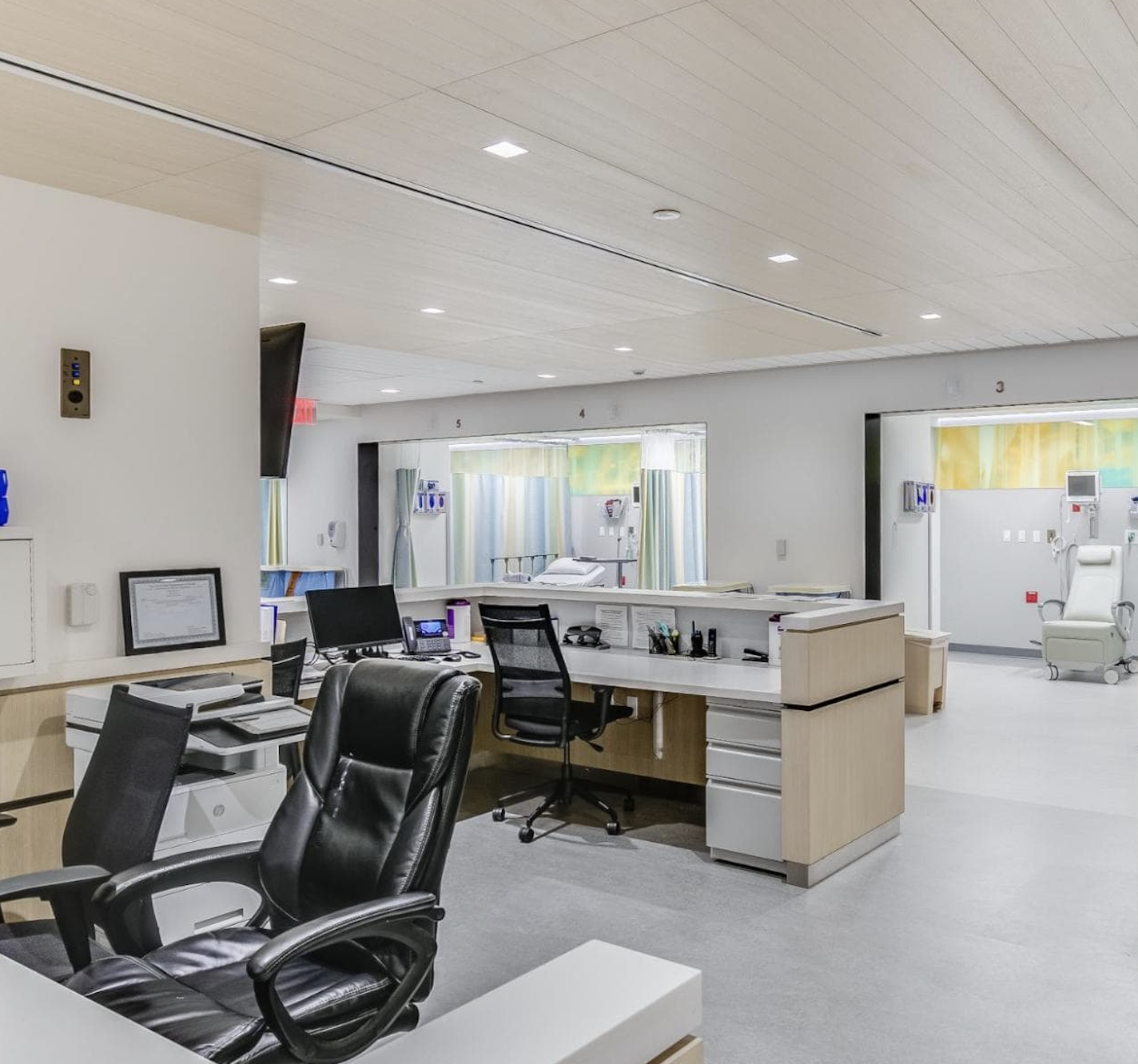
Healthcare construction compliance must be built into a project from day one. When it isn't, projects fail inspections, miss occupancy dates, and rack up expensive change orders. A common root cause is that compliance gets treated as something to address after problems surface rather than a discipline embedded from the start.
The stakes are real. A failed Joint Commission survey, a missed CMS Condition of Participation, or an ICRA documentation gap can push your occupancy date back by weeks and trigger significant rework costs. These outcomes are common when compliance is treated as an afterthought, and they're preventable.
After years of building and renovating medical offices, dental practices, and urgent care clinics across Indiana, the patterns of compliance failure we see at Ascension Construction are consistent. This article gives you a working healthcare construction compliance roadmap covering applicable regulations, infection control requirements, documentation systems, team structure, and a phase-by-phase checklist you can execute on your specific project.
The regulations every medical build must navigate
Medical facility construction isn't governed by a single rulebook. It draws from a layered stack of federal codes, national standards, and state-specific requirements that activate at different points in your project timeline. Understanding what applies, and when, is the first step toward keeping your project on schedule.
Federal codes and national standards that apply to clinical spaces
The core standards include NFPA 101 (Life Safety Code), NFPA 99 (Healthcare Facilities Code), ADA Standards for Accessible Design, CMS Medicare Conditions of Participation, and the FGI Guidelines for Design and Construction. Each governs a specific piece of the healthcare construction compliance puzzle. NFPA 101 covers egress and fire safety. NFPA 99 addresses medical gas systems, electrical systems, and ventilation. The FGI Guidelines set minimum ventilation rates, room sizing requirements, and pressure relationships for clinical environments.
ANSI/ASHRAE/ASHE Standard 170 controls the mechanical design of your clinical spaces. When the ACH design path is selected, general exam rooms in outpatient settings require a minimum of 2 air changes per hour, procedure rooms require 3 ACH at positive pressure, and emergency department waiting areas must be maintained at negative pressure. These values are inspection benchmarks under that design path, whether your HVAC system passes or fails depends on how well you've met them, as enforced by the authority having jurisdiction (AHJ) and referenced project specifications.
NFPA 101 also determines how your facility is classified, and that classification changes everything. Per NFPA 101, if four or more patients are incapable of self-preservation at any given time due to treatment or anesthesia, your facility is classified as an ambulatory health care occupancy, not a business occupancy. That classification triggers stricter egress requirements, smoke compartments, fire separation ratings, and in some cases an essential electrical system under NFPA 99. Hospital construction codes carry additional egress and clinical adjacency requirements that go further still, knowing which tier of regulation applies to your project type matters before the first drawing is issued.
Indiana-specific requirements and when they apply
Indiana adopts the International Building Code and NFPA standards through the Indiana Fire Prevention and Building Safety Commission. For licensed healthcare facilities, the 2022 FGI Guidelines are the most recent fully adopted edition, and they become legally enforceable for facilities participating in Medicare and Medicaid programs. The Indiana State Department of Health (ISDH) maintains separate licensing requirements for outpatient clinics, ambulatory surgery centers, and behavioral health facilities, each with its own approval timeline.
Local permitting in Indianapolis and surrounding Central Indiana municipalities adds another layer. Building, mechanical, electrical, plumbing, and above-ceiling permits each have their own submission requirements and review windows. Pulling all of them at the right time, before construction begins, is a scheduling discipline that directly affects your critical path.
ICRA and infection control: healthcare construction compliance requirements
For any renovation or construction inside or adjacent to an active healthcare facility, infection control protocols are non-negotiable. The ICRA process is the formal mechanism that protects patients during construction and shields your project from enforcement action. Getting it wrong is one of the most common reasons healthcare builds fail inspections. For additional context on how infection control drives project decisions, see our post The Importance of Infection Control During Healthcare Construction, Indiana Construction | Ascension.
What a complete ICRA plan must include
A compliant ICRA document requires five specific sections: project scope, construction activity type, population and geographical risk group, infection control classification (Class I through V), and the preventive measures compliance monitor. The completed form must be submitted to the infection prevention and control (IPAC) lead before work begins. Submitting it after demolition has started is a documentation gap that surveyors will flag immediately.
The ICRA authorization permit, training certificates for all workers, above-ceiling permits, and hot work permits must accompany the ICRA submission. ASHE's ICRA 2.0 tool is the current template standard; for an example ICRA form and checklist reference, review this ICRA tool form. Using standardized templates as your baseline gives you a document structure that regulators and infection control officers recognize and can audit efficiently.
Negative air pressure, barriers, and air monitoring records
For Class III, IV, and V projects, negative air pressure is required throughout the construction zone. Per ASHE ICRA 2.0 guidance, pressure differential readings must typically reach negative 0.01 inches water gauge, and those readings must be logged every shift, though exact logging intervals can vary by facility policy. HEPA filtration documentation and exhaust discharge verification are part of the same compliance package. Hard-wall barrier construction, dedicated worker access routes, and controlled debris removal routes are physical requirements, not optional best practices.
The daily air monitoring log must capture pressure readings, barrier integrity observations, and cleaning protocol compliance. Current logs must be posted at the ICRA entrance. If a surveyor walks your site and can't find a current log posted, that's a finding, regardless of whether your barriers are otherwise solid.
Worker training and certification requirements
ICRA training is not currently federally mandated for individual construction workers, but many healthcare facilities now contractually require that contractors use ICRA-certified workers on their projects. The 24-hour ICRA certification is a common contractual requirement for carpenters and lead trades at participating facilities. The 8-hour ICRA Awareness course is recommended for all other trades and healthcare facility employees who access the jobsite. ASHE's Certified Healthcare Construction (CHC) credential is the recommended standard for project leads and general contractors.
If your contractor can't confirm their team has completed this training, that's a risk your project timeline will eventually absorb.
Construction documentation for healthcare construction compliance
Disorganized or incomplete construction documentation is one of the most reliable predictors of a failed inspection. Regulators and accreditation surveyors review records as carefully as they inspect physical conditions. A gap in paperwork carries the same enforcement weight as a gap in your barriers.
What records you are required to maintain
The core documentation set for a clinical construction project includes ICRA authorization forms, daily infection control monitoring logs, air pressure readings, barrier inspection records, above-ceiling permits, hot work permits, worker training certificates, and RFIs or submittals tied to code-related scope changes. The Joint Commission also requires evidence of interim life safety measures (ILSMs) any time fire safety systems are temporarily impaired during construction. If your sprinkler system is offline for tie-in work, the ILSM documentation must be in the file before the system goes down. To understand The Joint Commission's expectations and how they influence planning and design, review this overview of the Joint Commission's role in hospital planning and design.
How to organize documents so nothing falls through the cracks
A cloud-based document management system with standardized naming conventions, version control, and assigned document ownership is the practical solution. Automatic review reminders for time-sensitive records, specifically permits and daily logs, prevent the drift that happens when project teams get busy. Field conditions change scope more often than schedules allow for, and when they do, the documentation must be updated to reflect what was actually built.
Staff turnover is a real compliance risk. Document ownership must transfer explicitly when a project manager, infection control officer, or licensure coordinator leaves mid-project. When ownership isn't reassigned, records go stale and gaps appear. That's a correctable problem before inspection and an expensive one after.
Assembling the right compliance team and engaging them early
The most expensive healthcare construction compliance mistakes aren't caused by ignorance of the rules. They're caused by bringing the right people in too late. By the time design is locked and a contractor is mobilized, many of the most consequential compliance decisions have already been made, often incorrectly. For a look at common schedule risks and how teams avoid them, see our article Common Construction Delays in Healthcare Projects (And How to Avoid Them), Indiana Construction | Ascension.
When your construction manager must be at the table
The construction manager should be engaged at the schematic or concept design phase, not after design development is complete. Early involvement enables preliminary cost input for compliance-driven systems like medical gas, HVAC, and emergency power. It enables constructability review of FGI-compliant layouts before they're locked in. It also enables procurement lead time planning for specialized materials with long-lead windows in the Central Indiana market.
The roles of the infection control officer and licensure coordinator
The infection control officer should be part of the design team from the first meeting, because ventilation choices, room pressurization decisions, and corridor layouts are made during schematic design. Waiting until construction is underway to loop in infection control means those decisions have already been made without the right input, and correcting them costs money.
The facility licensure coordinator validates that the design meets ISDH licensing requirements before it is ever permitted and tracks approval timelines so they don't land on the critical path. Regulatory deadlines and commercial construction schedules don't naturally align. Both roles exist specifically to manage that gap before it becomes a delay.
A phase-by-phase compliance checklist from pre-construction to occupancy
A checklist only works if it's built around your specific project type, regulatory class, and facility context. The following framework covers the core checkpoints that apply to most medical office, clinic, and outpatient facility builds in Indiana.
Pre-construction phase checkpoints
- Confirm ISDH licensing category and applicable FGI edition adopted by Indiana for your facility type.
- Complete the ICRA assessment and submit to the IPAC lead for authorization before mobilization.
- Verify ADA site compliance: accessible parking, entrance ramps, door clearances, and accessible fixture requirements.
- Pull all required permits: building, mechanical, electrical, plumbing, and above-ceiling (confirm with your local AHJ which permits apply to your project type).
- Confirm NFPA 101 egress plan and establish your ILSM protocol if existing fire safety systems will be temporarily impaired.
Active construction phase checkpoints
- Post the ICRA permit and current daily monitoring log at the work zone entrance before work begins each day.
- Verify negative air pressure readings every shift for Class III, IV, and V projects and log results.
- Conduct daily barrier inspections and document findings.
- Maintain HEPA vacuum protocols for all debris removal from the containment zone.
- Track all RFIs and field changes against approved construction documents and update compliance records when scope changes.
Pre-occupancy and final inspection checkpoints
- Schedule your fire marshal certification and NFPA 99 system testing well before your target occupancy date.
- Verify all ADA installations: grab bars, accessible signage, restroom fixture placement, and door hardware.
- Submit the complete documentation package to ISDH for your operating license with enough lead time to absorb a review cycle.
- Conduct an internal punch list walk with your infection control officer before project turnover.
- Confirm theCMS Conditions of Participation (CoPs)verification process applicable to your facility type is complete before any patient admission occurs, consult specific CoP sections for your facility category and applicable state survey guidance.
Why your contractor's healthcare expertise changes everything
Medical construction regulations are project-specific in ways that aren't obvious from the outside, and every item on that checklist requires someone who knows what it means, when it applies, and how to execute it correctly in the field. That's not knowledge a general commercial contractor develops by building offices and retail spaces.
A dental office and an urgent care clinic are governed by different FGI chapters, different ventilation requirements, and different ISDH licensing tracks. A contractor who hasn't built both doesn't know the difference until it shows up on an inspection report. By then, the fix is coming out of your budget and your schedule.
Ascension Construction is an Indianapolis-based contractor that builds and renovates medical offices, dental practices, and urgent care clinics across Central Indiana. ICRA protocols, Indiana building codes, ADA requirements, and ISDH licensing requirements are part of every clinical project we deliver, built into preconstruction, not addressed after a problem surfaces. Whether it's a dental practice build-out or a multi-room urgent care renovation, healthcare construction compliance starts at the first design conversation. For guidance on clinic and suite build-outs, see our Healthcare Tenant Improvements: A Complete Guide, Indiana Construction | Ascension.
If you're planning a medical office, clinic, or outpatient facility build in Indiana and want a contractor who treats regulatory compliance as part of the work rather than a separate problem to solve, reach out to Ascension Construction. We're built for that work.
Build your compliance plan before you break ground
Regulatory compliance in clinical construction isn't a bureaucratic hurdle. It's the framework that safeguards patients, protects your investment, and keeps your project on schedule. Every delay caused by a failed inspection or an incomplete documentation package was a preventable outcome.
The five action areas covered in this article give you a working framework for healthcare construction compliance: identify which regulations apply and when, implement a complete ICRA plan before mobilization, maintain audit-ready documentation throughout the project, build your compliance team early in the design phase, and execute against a phase-specific checklist. None of these are complicated in isolation. The problems come when they're treated as afterthoughts.
Start with the pre-construction checklist. Get your infection control officer involved before design is locked. And before you sign a contract, make sure your contractor has built in a clinical environment, not just near one. Contact Ascension Construction to build your healthcare construction compliance plan before you break ground and keep your project on schedule from day one.





.svg.webp)