The Importance of Infection Control During Healthcare Construction
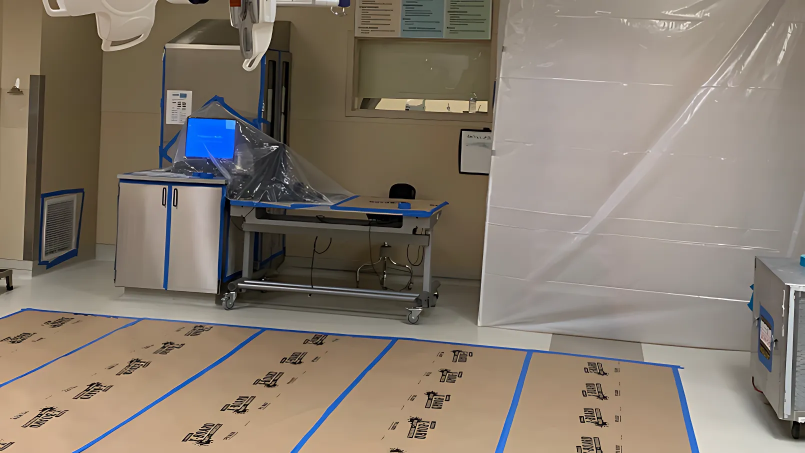
Infection control is one of the most critical aspects of healthcare construction and medical facility renovations. Unlike standard commercial projects, healthcare construction occurs in environments where patient safety, air quality, cleanliness, and contamination prevention directly affect human health. Whether renovating an occupied clinic, expanding a hospital wing, or performing phased construction inside a medical office, infection control planning must remain a top priority throughout every phase of the project.
Healthcare facilities often treat patients with weakened immune systems, respiratory conditions, chronic illnesses, or post-surgical recovery needs. Construction dust, airborne particles, mold spores, and debris generated during renovation work can create serious health risks if containment procedures are not properly implemented. As a result, infection control measures during healthcare construction are far more advanced than those used in traditional commercial remodeling projects.
One of the primary goals of infection control during medical construction is preventing airborne contaminants from spreading into active patient care areas. Demolition, saw cutting, sanding, framing, drywall work, ceiling removal, and mechanical modifications can release dust and particles into the air if proper containment systems are not in place. In occupied healthcare facilities, even small amounts of uncontrolled debris can affect air quality and create safety concerns for patients and medical staff.
To reduce these risks, healthcare contractors often implement temporary containment barriers designed to isolate construction zones from operational areas. These barriers may include sealed partitions, temporary walls, negative air systems, plastic containment systems, and controlled access points that help prevent dust migration throughout the building.
Negative air pressure systems are commonly used during healthcare renovations to control airflow inside construction zones. These systems help ensure airborne particles remain contained within the work area rather than spreading into patient corridors, exam rooms, waiting areas, or treatment spaces. Air filtration systems equipped with HEPA filtration are frequently utilized to capture fine particles generated during construction activities.
Scheduling also plays an important role in infection control planning. Many healthcare renovations are performed during nights, weekends, or off-hours to minimize patient exposure to construction activities. Phased scheduling allows contractors to isolate work areas while healthcare providers continue operating portions of the facility safely during construction.
Dust management procedures are another essential component of healthcare construction. Contractors must regularly clean work zones, protect adjacent areas, control debris removal routes, and minimize contamination risks throughout the project. Specialized cleaning procedures are often required before renovated areas can be reopened for patient use.
HVAC coordination is equally important during healthcare renovations. Existing ventilation systems may need temporary modifications to prevent dust and airborne contaminants from circulating into occupied spaces. In some situations, duct systems are temporarily sealed or adjusted during construction to maintain proper airflow separation between active healthcare areas and work zones.
Water intrusion and moisture control are additional infection control concerns during healthcare construction projects. Uncontrolled moisture can lead to mold growth behind walls, above ceilings, or within insulation systems if not addressed properly. Healthcare facilities must remain especially proactive about leak prevention and moisture management because mold exposure can create significant health risks in patient care environments.
Communication between contractors, healthcare administrators, and medical staff is another critical part of infection control planning. Construction schedules, shutdowns, temporary access changes, and containment procedures should all be coordinated carefully to ensure healthcare operations continue safely throughout the project.
At Ascension Construction, we understand that healthcare construction involves far more than standard commercial remodeling. Infection control planning, containment systems, phased scheduling, and operational coordination are essential components of creating safe healthcare renovation environments.
Whether performing clinic renovations, dental office remodels, urgent care build-outs, or occupied healthcare construction projects throughout Indiana, our team focuses on minimizing disruption while protecting both patients and staff throughout every phase of construction.
Healthcare facilities depend on clean, controlled, and safe environments to operate effectively. Proper infection control planning during construction helps reduce risk, maintain operational continuity, and create safer renovation processes that support both healthcare providers and the communities they serve.
https://pubmed.ncbi.nlm.nih.gov/10760224/
https://apic.org/Resource_/store/books/preview/SLS9808_Preview.pdf





.svg.webp)