CHC Certification Contractors
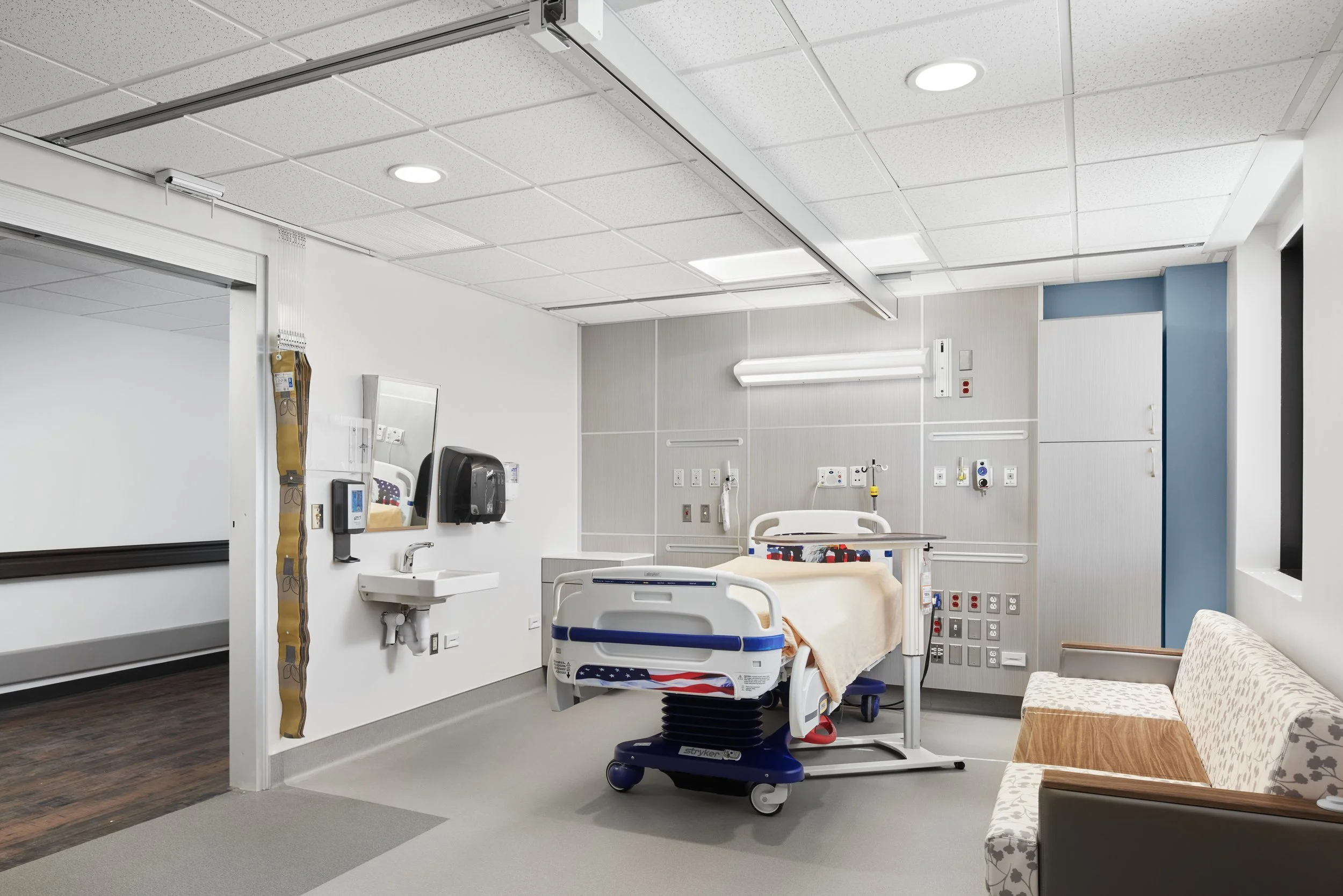
Healthcare construction is its own category of risk. Contractors who build in occupied hospitals, active clinics, and dental offices are working inside environments where dust control isn't a preference; it's a patient safety requirement. Infection control protocols, interim life safety measures, medical gas compliance, and fire safety during construction aren't optional add-ons. They're the baseline. That's why the Certified Healthcare Constructor (CHC) credential exists, and why CHC certification in construction has become a meaningful differentiator for contractors working in clinical environments.
The CHC certification is administered by the American Hospital Association Certification Center (AHA-CC) and supported by the American Society for Healthcare Engineering (ASHE). It's not a general contractor license. It's a specialty credential that proves a construction professional has real healthcare project experience and the knowledge to back it up. Companies like Ascension Construction pursue the CHC specifically because their medical office, dental, and healthcare facility clients require that level of proven competency, not just general construction experience.
This article gives you two things. If you're a contractor, you'll get a clear roadmap covering eligibility, the exam, costs, and how to prepare. If you're a facility owner or administrator, you'll understand exactly what the credential means and how to confirm a contractor actually holds it.
What CHC certification actually means in the construction industry
CHC stands for Certified Healthcare Constructor. It's a voluntary professional credential issued by the AHA Certification Center. Unlike a general contractor license, which focuses on trade competency and legal authorization to build, the CHC specifically addresses the knowledge and experience needed to work safely in healthcare environments: occupied patient floors, sterile clinical spaces, imaging suites, and everything in between.
ASHE, a personal membership group of the AHA, developed the CHC program and provides the study resources, review courses, and industry alignment that keep the credential current. ASHE is not the certifying body; AHA-CC is. But ASHE is where you'll find the prep courses, the candidate handbook, and the connection to industry standards like NFPA 99, NFPA 101, NFPA 241, and the FGI Guidelines. Understanding that distinction helps you navigate both organizations effectively.
For a healthcare facility owner, the CHC credential signals that the contractor has documented field experience on healthcare construction projects, understands infection control risk assessment (ICRA) processes, and has passed a competency exam covering life safety, project management, and compliance requirements in clinical environments. That's a meaningfully different profile from a general commercial contractor with no healthcare project history.
CHC certification in construction: Who qualifies
AHA publishes three official pathways based on your education level. All three require that your healthcare construction work occurred within the last three years, and all three require at least three years in a management, supervisory, or administrative role.
- Bachelor's degree or higher: 5 years of total associated construction experience, with at least 2 of those years in healthcare construction, plus 3 years in a management or supervisory role.
- Associate degree: 7 years of total associated construction experience, 5 years in healthcare construction, 3 years in management.
- High school diploma or equivalent: 10 years of total associated construction experience, 5 years in healthcare construction, 3 years in management.
Always confirm these requirements against the current CHC Candidate Handbook published by AHA-CC, as eligibility thresholds can change between editions. The handbook is the authoritative source, not third-party summaries.
AHA's definition of "associated construction experience" is broader than some candidates expect. Eligible functional areas include construction and project management, estimating, planning, marketing, project superintendent or foreman roles, architect and engineer design, and design-and-construction positions held within a healthcare organization. If you've been involved in healthcare facility projects across multiple functions, you may have more qualifying experience than you realize.
On documentation: AHA's official guidance indicates you are not required to submit supporting documentation when you apply, but you need to report your eligibility information accurately. Review the current CHC Candidate Handbook before applying to confirm what must be included and how to describe your experience correctly.
What the CHC exam covers and how it's scored
Exam format and scoring
The exam has 120 total multiple-choice questions, but only 100 are scored. The remaining 20 are unscored pretest items embedded throughout, you won't know which ones they are. The time limit is 2 hours. To pass, you need a scaled score of 650 on a 400-to-700 scale. Testing is administered through PSI, either at a physical PSI testing center or via remote proctoring on your own computer.
Domains, weights, and where to focus
The CHC exam covers content domains specific to healthcare construction, including areas such as ICRA and ILSM implementation, infection control, fire and life safety, construction management in clinical environments, and compliance with standards like NFPA 99, NFPA 101, NFPA 241, and the FGI Guidelines. The exact domain titles, question counts, and weightings are published in the current CHC Candidate Handbook from AHA-CC. Review that document directly before building your study plan, as domain structures are updated periodically and third-party breakdowns may not reflect the current exam blueprint.
As a general approach, weight your study time toward the highest-weighted domains. Candidates who neglect the top-weighted content areas typically show it on their score, while those who treat all domains equally often underperform on the sections that count most.
Study resources and prep timeline
Start with the CHC Candidate Handbook and the CHC Self-Assessment Exam (SAE) that AHA-CC offers. Both give you a direct look at what the exam expects before you invest in additional prep materials.
From there, ASHE's CHC Exam Review Course is available in in-person, live online, and self-paced e-learning formats at different price points. Core reference texts include NFPA 99 and NFPA 101 handbooks, NFPA 241, FGI Guidelines for Design and Construction, and the Construction Management of Health Care Projects reference. ASHE's Health Care Construction Workshop is also part of the recommended prep pathway. Most candidates combine structured coursework with self-study over an 8-to-12 week window before scheduling their exam.
The application process, timeline, and what it costs
The application process runs through the AHA Certification Center online. The steps are straightforward: complete the online application, answer the eligibility questions, submit your applicant information, accept the terms and conditions, and submit payment. Once AHA confirms your eligibility, you schedule your exam appointment directly through PSI. You have 90 days from eligibility confirmation to schedule and complete the exam, don't let that window sit idle.
The current exam fee structure listed on the AHA Certification Center website is $400 for ASHE members and $570 for non-members. Retake attempts cost $325. If your application requires a PQE review, add $75 to the application fee. Recertification is required every two years. Current renewal fees are $135 for members and $225 for non-members, with a $50 late fee if you renew within 30 days after your expiration date. Because fee structures can shift, always verify current amounts against the AHA-CC website before you apply or renew.
ASHE's CHC Exam Review Course fees give you a sense of prep costs on top of the exam fee: $485 (member) or $605 (non-member) for in-person, $345 or $435 for live online, and $235 or $289 for the self-paced e-learning version. The e-learning course gives you 90 days to complete it after registration and does not include the exam fee or register you for the exam.
Why CHC certification matters on medical and dental facility projects
Healthcare construction requires more than general building knowledge. When a contractor is working near occupied patient areas, sterile procedure rooms, or active imaging suites, they need to execute an Infection Control Risk Assessment (ICRA) process before work begins: identify the construction activity, identify the patient and staff risk group, determine the ICRA class using the standard matrix, and assign the specific controls required. Higher-risk work classifications require full critical barriers, negative air pressure with HEPA filtration, sealed HVAC penetrations, and dust-free containment inspection before those barriers come down.
Interim life safety measures (ILSMs) layer on top of ICRA. Whenever construction impairs exits, smoke barriers, fire alarm coverage, or sprinkler systems, contractors must implement temporary protective measures: alternate egress routes, additional fire watch, temporary signage, and maintained access to fire protection equipment. These aren't discretionary. They're tied to Joint Commission standards and CMS Conditions of Participation.
Ascension Construction pursues the CHC credential because healthcare and dental facility projects demand this level of compliance fluency. Medical office build-outs involve NFPA 99 medical gas requirements, fire safety sequencing during construction, and patient safety protocols that don't appear on standard commercial tenant improvement projects. A CHC-certified contractor arrives on a healthcare job site with that framework already internalized, directly closing the knowledge gap between contractors who understand healthcare compliance and those who are learning it on your project.
How to verify a contractor's CHC credential before you hire
The AHA Certification Center maintains CHC verification resources, and ASHE's certifications page lists CHC Verification as an available tool for facility administrators. The most direct path is to ask the contractor for their CHC credential details and confirm active status through AHA-CC. You can reach the AHA Certification Center at 312-422-3702 or certification@aha.org for authoritative status confirmation. Don't rely solely on a badge or a line on a resume, the credential has a two-year recertification cycle, and active status matters more than a past certification date.
When vetting contractors for a healthcare construction project, put these questions to them directly: Can you provide your CHC certification number and renewal date? How many healthcare facility projects have you completed in the last three years? Walk me through your ICRA process for an occupied facility renovation. A qualified CHC-certified contractor answers all three without hesitation. Watch for contractors who can't explain ICRA or ILSM protocols, who have no documented healthcare project history in recent years, or who approach a medical office build-out the same way they'd handle a standard commercial tenant improvement. Those gaps aren't just a credentialing technicality, they carry real compliance and liability risk for the facility and the patients inside it.
The bottom line on CHC certification in construction
For contractors, the CHC is a structured, achievable credential with clear eligibility pathways, a well-defined exam you can prepare for systematically, and a two-year recertification cycle that keeps your knowledge current. The investment in time and exam fees is real, but it opens doors to a project category that demands verified expertise and pays accordingly.
For facility owners and administrators, CHC certification in construction is ultimately about accountability. It means the contractor standing in your occupied clinic or hospital corridor has documented healthcare project experience and has proven their knowledge of the compliance frameworks, NFPA and FGI standards among them, that protect patients. Verifying that credential before a project starts, rather than discovering a knowledge gap after a problem surfaces, is one of the most practical risk-management steps you can take.
If you're evaluating healthcare construction contractors and want to discuss what a CHC-certified team brings to a medical office, dental build-out, or clinic renovation, reach out to Ascension Construction directly. The conversation starts with your project requirements, not a sales pitch.
Frequently asked questions about CHC certification in construction
How long is CHC certification valid?
CHC certification is valid for two years. Credential holders must complete the recertification process before their expiration date to maintain active status. A 30-day grace period applies with a late fee; after that, the credential lapses.
How do I verify that a contractor holds an active CHC?
Contact the AHA Certification Center directly at 312-422-3702 or certification@aha.org to confirm active status. ASHE's certifications page also offers a CHC Verification tool for facility administrators. Always verify active status rather than relying on a credential date listed on a proposal or resume.
Is the CHC recognized nationally?
Yes. The CHC is a nationally recognized credential administered by the AHA Certification Center. It is relevant to healthcare construction projects across the United States, regardless of geography, and is referenced by facility owners, health systems, and regulatory bodies evaluating contractor qualifications.
Can someone outside of a general contracting firm earn the CHC?
Yes. AHA's eligible functional areas include project management, estimating, planning, architecture and engineering, and design-and-construction roles within healthcare organizations. The credential is not limited to general contractors, it applies to anyone with qualifying management-level experience on healthcare construction projects.





.svg.webp)