Wet Construction: Why Waterproofing Matters More Than Finishes
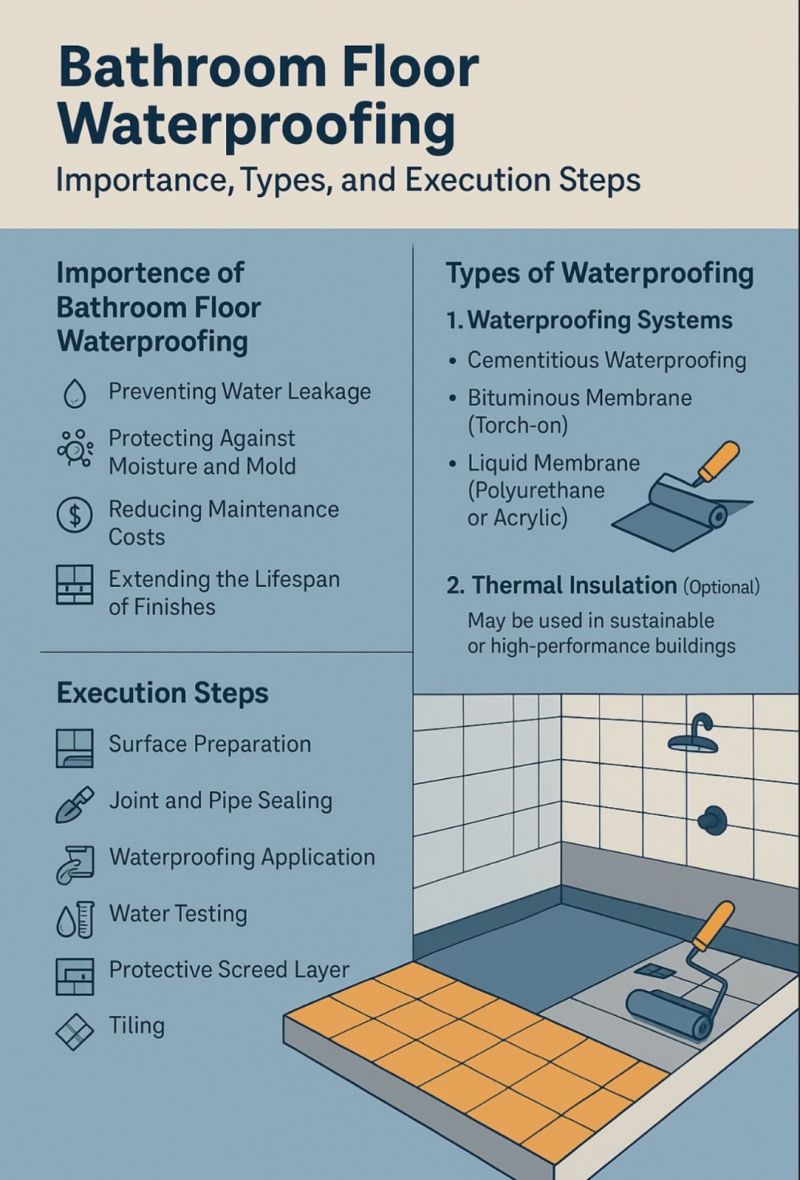
Property owners often focus on the visible aspects of a construction project. Flooring, tile selections, paint colors, fixtures, and finishes tend to receive the most attention.
However, some of the most important components of a successful commercial project are the systems that remain hidden behind finished surfaces.
Waterproofing is one of those systems.
Whether constructing a healthcare facility, restaurant, locker room, fitness center, commercial restroom, or hospitality property, proper waterproofing is often the difference between a facility that performs for decades and one that experiences costly failures within a few years.
What Is Wet Construction?
Wet construction refers to building environments regularly exposed to moisture, water, humidity, or washdown operations.
Examples include:
- Commercial kitchens
- Healthcare facilities
- Public restrooms
- Locker rooms
- Hotel bathrooms
- Laundry facilities
- Utility rooms
- Fitness centers
- Laboratory spaces
These environments require specialized waterproofing systems to protect underlying building materials.
The Problem with Prioritizing Finishes
Many projects place significant emphasis on aesthetics while underestimating waterproofing requirements.
Beautiful tile installations may appear flawless on opening day, but if waterproofing systems are missing or improperly installed, water intrusion can begin immediately.
Eventually, moisture penetrates beneath finishes and begins damaging:
- Subfloors
- Wall assemblies
- Framing systems
- Insulation
- Adjacent rooms
The result is expensive reconstruction work that often requires removing newly installed finishes.
Common Waterproofing Failures
Commercial renovations frequently reveal:
Missing Waterproof Membranes
Tile and grout are not waterproof.
Without proper waterproofing membranes beneath them, water can migrate into surrounding building materials.
Improper Drainage Design
Standing water creates long-term moisture exposure.
Improper floor slopes and drainage layouts contribute significantly to failures.
Unsealed Penetrations
Every pipe, conduit, and fixture penetration creates an opportunity for water intrusion.
These areas require proper detailing and sealing.
Inadequate Moisture Protection
Different environments require different waterproofing systems.
Using residential-grade products in commercial facilities often results in premature failures.
The Financial Impact
Waterproofing failures can lead to:
- Mold remediation
- Facility shutdowns
- Structural repairs
- Insurance claims
- Tenant complaints
- Health code violations
- Increased maintenance costs
These issues frequently cost many times more than the original waterproofing investment.
Building for Long-Term Performance
Successful wet construction projects require a comprehensive approach that includes:
- Waterproof membranes
- Moisture barriers
- Proper drainage systems
- Sealants and penetration protection
- Moisture-resistant materials
- Quality installation practices
Every layer plays a role in protecting the facility.
The Foundation of Every Successful Facility
Customers notice finishes.
Building owners experience performance.
Long-term success depends on the systems hidden behind walls, beneath flooring, and underneath finished surfaces.
At Ascension Construction, we understand that lasting commercial construction begins long before the final finishes are installed. Proper waterproofing protects facilities, reduces maintenance costs, and extends the life of the investment.
https://themollergroup.com/waterproofing-matters-the-hidden-side-of-a-bathroom-remodel/





.svg.webp)