How Much Does a Dental Office Build-Out Cost vs a Medical Clinic?
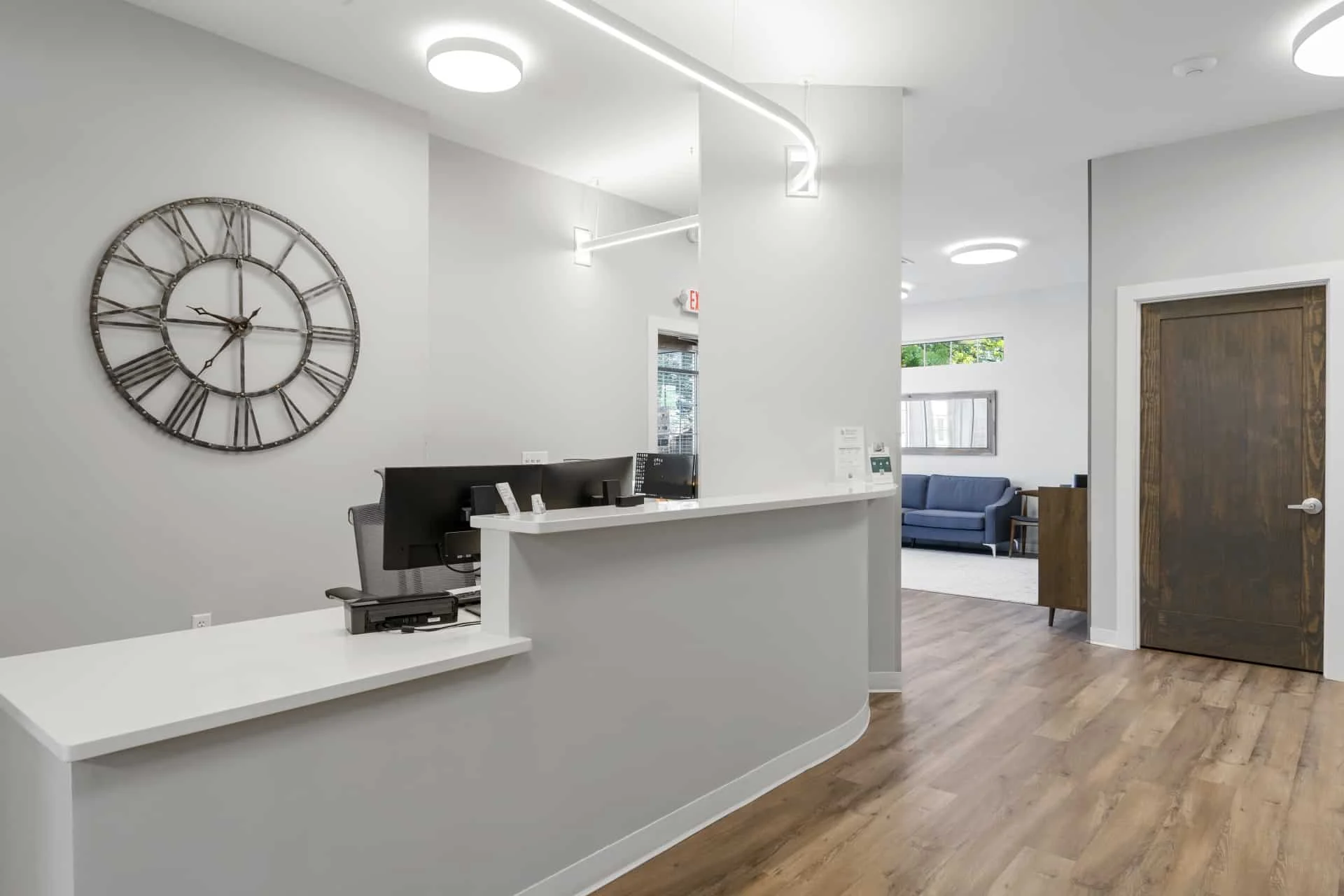
When we price a dental build-out and a medical clinic in the same week, they look almost identical on the square footage estimate. Then you open the wall plans. The mechanical drawings alone tell you everything you need to know about where the money actually goes. At Ascension Construction, we've delivered both project types across the Indianapolis market, and the cost gap between them surprises almost every first-time owner, often not in the direction those owners expected.
The core tension comes down to this: dental spaces are plumbing-heavy and operatory-driven; medical clinics are systems-heavy and code-intensive. Both carry hidden costs that never appear in an initial estimate. This article gives you real 2026 per-square-foot ranges for each project type, the primary cost drivers behind each number and a practical framework for building an accurate budget, so you understand the dental office build-out cost per square foot versus medical clinic construction before you sit down with any contractor.
The baseline numbers: what each build-out actually costs per square foot
Dental office construction-only tenant improvement scope runs $150 to $300 per square foot nationally in 2026. That figure covers walls, finishes, mechanical, electrical, and plumbing, but not the chairs in the rooms. Add dental chairs, delivery systems, overhead lighting, and cabinetry and the all-in number climbs to $200 to $350 per square foot. A standard 10-operatory practice typically totals around $1.5 million all-in when you factor in equipment. If you are working from an estimate that is five or more years old, add roughly 40% to account for current material and labor costs.
Medical clinic tenant improvements in an existing shell land between $120 and $220 per square foot depending on MEP condition and specialty level. Ground-up medical office building construction is a different conversation entirely, ranging from $350 to $650 per square foot nationally, with high-cost metro markets pushing well past that ceiling. The Midwest carries a regional multiplier of approximately 1.08x against the national average, compared to 1.35x in the Northeast and 1.30x on the West Coast. That compression makes the Indianapolis market meaningfully more favorable than coastal alternatives for the same project scope.
On a pure construction-per-square-foot basis, medical clinic TI and dental TI can look nearly identical at the low end of each range. The real divergence surfaces when you count equipment, specialty systems, and the regulatory finish level each project demands. That is where the healthcare build-out cost per square foot story actually lives. For further detail on medical-specific cost drivers and regional considerations, see How Much Does It Cost to Build or Remodel a Medical Office in 2026?, Indiana Construction | Ascension.
Dental office build-out cost per square foot: key drivers
The single biggest cost driver separating dental from general medical construction is plumbing concentration. Each dental operatory requires dedicated water supply, waste lines, air lines, and suction lines running directly to a single chair position. That infrastructure is compressed into a 300- to 400-square-foot room, which pushes the per-square-foot cost of operatory space to the top of the range for any build-out category. A standard medical exam room, by comparison, needs one hand-washing sink and basic electrical. The infrastructure gap between those two rooms explains most of the dental premium.
Vacuum, compressed air, and medical gas systems
Central vacuum and compressed air systems add approximately $1,500 per operatory for equipment alone, and they require a dedicated mechanical room with adequate square footage and ventilation. Practices integrating nitrous oxide delivery add medical gas infrastructure on top of that, which triggers specific code compliance requirements in Indiana under IDOH radiation and gas regulations. None of these systems have an equivalent in general medical office construction, and all must be planned into the building layout from day one, retrofitting them after the fact is significantly more expensive. For benchmark pricing on central vacuum installation, see resources on the cost to install a central vacuum.
Specialty cabinetry and per-operatory equipment
Specialty cabinetry is not standard millwork. Dental casework is custom or semi-custom, built to integrate with plumbing runs, equipment brackets, and ergonomic chair positioning. Per-operatory equipment packages covering the chair, delivery unit, overhead light, and cabinetry run $20,000 to $40,000 per room before construction labor. The sterilization center is a separate cost center entirely, typically equivalent to outfitting one additional operatory at $30,000 to $40,000. Plan that room as a standalone budget line, not as part of the clinical suite average. For a deeper look at typical dental build budgets and equipment allowances, consult a dental office build cost guide.
What drives costs in medical clinic construction per square foot
Medical clinic construction can look cheaper on a healthcare fit-out cost per square foot basis at the TI level, but several elements push the budget significantly higher, especially for specialty clinics, urgent care facilities, or any space with dedicated procedure rooms. When a standard office shell is converted to medical use in Central Indiana, full MEP upgrades are nearly always required. That conversion work runs $150 to $220 per square foot before any specialty build-out, which erodes the cost advantage quickly. For a primer on how medical office requirements differ from standard commercial projects, read What Makes Medical Office Construction Different From Standard Commercial Projects?, Indiana Construction | Ascension.
MEP upgrades and clinical finishes
A well-designed primary care clinic distributes square footage across exam rooms, nurse stations, provider offices, waiting areas, and reception. None of those spaces carry the per-room infrastructure load of a dental operatory, but the aggregate MEP, millwork, and finish cost across a full suite accumulates steadily. Code-compliant clinical finishes add cost across every zone: sealed flooring, antimicrobial wall surfaces, and hand-washing stations positioned per infection control guidelines all carry a price premium over standard commercial finishes. If you want a practical walkthrough of the sequencing and decisions that drive those costs on a build-out, see Step-by-Step: How a Medical Office Build-Out Actually Works, Indiana Construction | Ascension.
Imaging rooms and specialty procedure spaces
Specialty medical clinics with imaging rooms or minor procedure rooms cross into a fundamentally different cost tier. X-ray shielding and dedicated power infrastructure alone add $10,000 to $100,000 or more per room depending on the technology. CBCT and digital imaging units now run $30,000 to $50,000. Any facility with an imaging suite should budget that room separately from general clinical space and not fold it into the per-square-foot average, doing so will mislead everyone involved in the planning process.
Soft costs and contingencies that most owners underestimate
The hard construction cost is only part of the number. Soft costs on healthcare and dental projects consistently run 20 to 30% of total project cost, and first-time build-out owners are caught off guard by this figure more often than any other line item. Architectural and engineering fees alone run 8 to 15% of total project cost. Permits and regulatory fees add another 3 to 5%. On a $500,000 dental build-out, that is $55,000 to $100,000 before a single wall goes up.
Furniture, fixtures, and equipment are almost universally excluded from contractor bids. So are structured cabling, practice management systems, security systems, and signage. For dental projects, IT infrastructure and lab equipment, including CAD/CAM and imaging systems, can add $50,000 to $80,000 on top of construction. Medical offices carry similar add-ons. Always build a contingency of 10% for new construction and 15 to 20% for renovations into your planning budget before you share any numbers with a lender or landlord. That buffer is not pessimism; it reflects how healthcare and dental projects actually perform in the field.
Negotiating a tenant improvement allowance from your landlord can offset a portion of these costs. In the Indianapolis market, TI allowances for medical and dental spaces on long-term leases typically range from $40 to $120 per square foot. That number sounds meaningful until you compare it to a dental build-out that runs $250 per square foot in construction costs alone. Understanding the gap between what a landlord will fund and what the project actually costs is a critical step before you sign a lease. For guidance on TI allowances specific to dental projects, see this discussion of a dental tenant improvement allowance.
How to plan an accurate budget before you talk to a contractor
The most common mistake is going to a contractor with a square footage number and expecting a firm price. The second most common mistake is accepting a price without understanding what it includes and what it does not. Before any contractor can provide a meaningful number, they need to understand your operatory or exam room count, the shell condition of the space, what specialty rooms are required, and your target finish level. Without those inputs, any budget figure is a guess dressed up as a proposal.
The Midwest regional multiplier of 1.08x versus the national average means a dental build-out priced at $580 per square foot in New York might land closer to $200 to $280 per square foot in the Indianapolis market for the same scope. That is a real structural advantage for Central Indiana practice owners, but only if you are working with a contractor who has demonstrated local cost knowledge. For national benchmark and comparative cost resources, see publications such as cost to build a hospital data and similar construction-cost references.
Before committing to any bid, every dental or medical build-out owner should ask their contractor four direct questions: Does this price include MEP design and permits, or only construction? What is the operatory or exam room count driving your mechanical assumptions? Is FF&E included or excluded from this number? What contingency is built into the total?
A contractor who cannot answer those questions clearly is not the right contractor for a healthcare project, regardless of how competitive the bid looks on paper. For a practical planning range, start with these inputs: total square footage, operatory or exam room count, new construction versus TI in an existing shell, shell condition (cold dark shell versus warm lit shell), specialty rooms required, and target finish level. Run those inputs against the per-square-foot ranges covered here, then add 20 to 25% for soft costs and contingency. That exercise produces a realistic planning number before anyone picks up a pencil or generates a formal estimate.
The bottom line on dental versus medical construction costs
Dental office build-out cost per square foot and medical clinic construction cost per square foot occupy similar ranges at the TI level, but the cost drivers are fundamentally different. Dental projects are driven by operatory plumbing, vacuum systems, specialty cabinetry, and equipment-heavy rooms. Medical clinics are driven by MEP upgrades, regulatory finishes, and specialty room infrastructure. Both project types carry soft costs and contingencies that routinely exceed what first-time owners expect.
In Central Indiana, the regional market is more favorable than coastal alternatives, but that advantage only materializes if you work with a contractor who has a proven track record in the Indianapolis market across both project types. Getting an accurate number starts with the right contractor asking the right questions about your specific program before any budget goes on paper. If you are planning a dental or medical build-out in the Indianapolis area, reach out to Ascension Construction for a direct conversation about what your project actually requires and what it will realistically cost in this market.





.svg.webp)