Construction Contractor Near Me
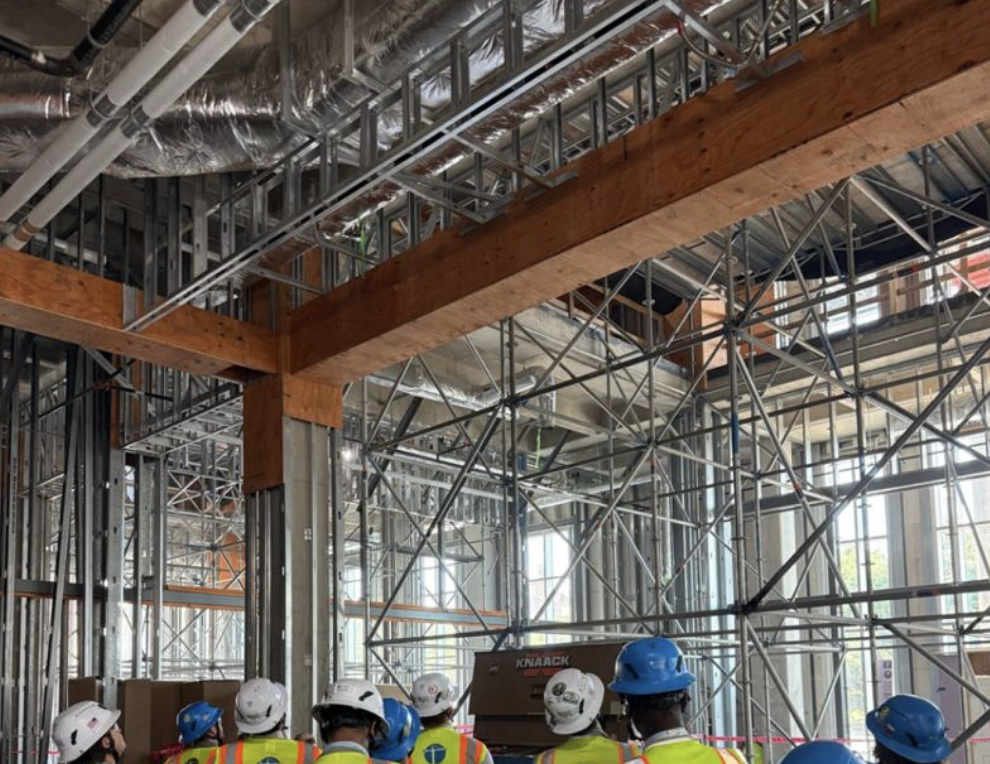
Most people search for a construction contractor near me the same way they search for a plumber: type it in, pick the first few results, and call whoever has decent reviews. That works fine for a leaky faucet. It does not work for a commercial build-out or a medical office renovation where local permitting timelines, inspection sequences, and code compliance can make or break your schedule before a single wall goes up.
The real risk in hiring a contractor is not overpaying. It is hiring someone who does not know how your city's permitting office operates, how long inspections take, or what your project type actually requires. A locally rooted contractor with documented experience on commercial and healthcare projects brings that embedded knowledge before the project even starts. No online directory listing tells you that. You have to know how to look for it.
This guide covers the full process: where to find construction companies near me, what credentials to verify, what questions to ask, how to read a bid honestly, and why local knowledge matters more than any star rating.
What actually matters before you start your search
Most people treat finding a contractor like selecting a vendor. The reality is different. A contractor is a business partner for the duration of your project, and a wrong hire is expensive to undo. Before you open a browser tab, get clear on four things: license, insurance, portfolio match, and local market knowledge. Everything else is secondary.
Licensing and insurance are non-negotiable starting points
A license and a certificate of insurance are not bureaucratic formalities, they are the floor. Without a valid license, a contractor who causes damage or fails to complete the job leaves you holding the liability with limited legal recourse. Without insurance, a worker injured on your site becomes your problem in ways that can outlast the project by years. Verify both items before any conversation about price, timeline, or design.
Portfolio match matters more than years in business
A contractor with 20 years of residential remodeling is not the right hire for a commercial medical office build-out. The relevant question is not how long they have been in business. It is whether they have completed your project type, at your scale, with your compliance requirements. A matched portfolio is a more reliable signal than tenure. Look for real, completed projects that resemble yours, not just a long list of services they claim to offer.
Local market knowledge is the thing most people underestimate
Permitting timelines, inspection sequences, zoning nuances, and submission requirements vary city to city. A contractor who does not regularly work in your market will not know the difference until it shows up as a delay on your project. This does not appear on any website. It shows up in how the contractor talks about your local permit office and whether they can give you a realistic timeline before breaking ground.
Where to find a construction contractor near me
There is no shortage of places to find a local contractor near me. The useful question is what each platform is actually good for, because they are not interchangeable.
Directory platforms worth using and what each one is good for
Start with four platforms and use each one for its actual strength:
- BBB: Best used as a credibility and complaint check, not a discovery tool. Accreditation signals that a business has met certain standards, but it does not tell you whether they have done your project type well.
- Thumbtack: A lead marketplace where contractors bid for your project. Useful for an initial read on price ranges and response speed, not for deep vetting.
- Houzz: The strongest platform for portfolio-heavy research. Look at real project photos from completed jobs, not marketing renders. For commercial interiors and remodeling, this is the most visually useful source.
- Yelp: Review-driven local discovery. Read specific, detailed reviews that mention communication, timelines, and how the contractor handled problems. Star averages alone tell you almost nothing.
How to filter your shortlist efficiently
Start with five or six names from directories. Cut to three based on portfolio match and specific review content, look for reviews that mention timelines, communication under pressure, and how problems got resolved. Verify credentials on all three before scheduling a single conversation. That sequence saves you from wasting time interviewing contractors who cannot pass the basics.
When referrals still beat any platform
A referral from a business owner in your industry who completed a similar project is often more valuable than dozens of online reviews. The referral source can tell you how the contractor communicated under pressure, whether the project hit its schedule, and how the finished space has held up, details no star rating can capture. If you know someone in your building, your industry, or your network who recently completed a similar project, ask them first.
How to verify a construction contractor near me before the first call
Credential verification can typically be completed in under an hour and protects you from a range of expensive problems. Do not skip it, and do not let a contractor's confidence or polished website substitute for the actual check.
Checking license status through your state's licensing board
Go to the official state licensing board website, not a third-party aggregator. Search by license number first, then by business name. Confirm the license is active, the classification matches the type of work being done, the name and address match the contractor you are speaking with, and no disciplinary actions are listed. In Indiana, the Professional Licensing Agency (PLA) is the relevant starting point for trade license verification, they provide an online license lookup tool for exactly this purpose. Note that general contracting licensing may also involve local building department requirements depending on the project type and municipality.
Reading a certificate of insurance correctly
Ask the contractor for a certificate of insurance and review it carefully. For commercial work in Indiana, it should show general liability coverage of at least $1 million per occurrence and $2 million aggregate, workers' compensation coverage, and clearly listed effective and expiration dates. Do not accept the document at face value. Call the insuring company directly to confirm the policy is active, insurers can verify a policy's status in a matter of minutes, and that call is the only way to confirm the certificate is legitimate.
What bonding actually protects you from
Bonding is financial protection against contractor nonperformance or abandonment. It reduces your financial exposure if a contractor walks off the job or fails to pay subcontractors. It does not predict whether a contractor communicates well, builds quality work, or meets your schedule. Both bonding and insurance matter, but they cover different risks. Treat them as separate checkboxes, not interchangeable ones.
Questions to ask during the estimate and interview process
The first conversation with a contractor tells you a lot, but only if you ask the right things. Generic questions get generic answers. Specific questions reveal whether a contractor has actually thought through your project.
Scope, timeline, and who's managing the site
These four questions cut through the surface quickly:
- Who will be on-site daily, and who has final authority over work decisions?
- What is the start date, and what specific milestones drive the timeline?
- Who handles permits and coordinates inspections?
- How are delays documented and communicated to you?
If a contractor cannot answer these clearly and specifically, that is your answer. A contractor who has managed projects like yours can address all four without hesitation.
Payment schedule, change orders, and scope shifts
Ask what the deposit is and how progress payments are structured. Confirm that change orders are always documented in writing before work proceeds. Ask how unforeseen conditions, like hidden structural issues, are handled and what the process looks like when actual costs exceed an allowance. Get the warranty terms in writing before you sign anything. A contractor who resists putting these answers in writing is showing you exactly what the project experience will look like.
How to compare bids without getting misled
The cheapest bid is not the best bid. It is usually the most incomplete one. Comparing estimates accurately depends on knowing what a complete, honest bid looks like in the first place.
What a complete estimate always includes
A solid bid breaks down labor by trade, materials with quantities and specifications, allowances clearly labeled as estimates, permits and inspection fees, demolition and disposal, subcontractor scope, equipment rentals, and contingency shown as a separate line. If the estimate is a single lump-sum number, ask for the full breakdown before comparing it to anything else. You cannot compare bids that do not share the same structure.
Red flags that signal a problem contractor
Watch for these specific warning signs:
- Vague line items like "miscellaneous work" or "standard materials" with no specification
- Missing obvious cost categories: cleanup, temporary utilities, permit fees, or disposal
- Allowances buried inside totals with no explanation of what happens when actual costs exceed them
- No labor and material split, making it impossible to understand where the money goes
- A bid dramatically cheaper than the others with no clear explanation for the gap
That last point deserves emphasis. A bid that comes in significantly lower than the others, 20 to 30 percent or more, is not a deal. It typically signals missing scope, inferior materials, or a setup for aggressive change orders down the road. Verify scope alignment in writing before accepting any low bid as legitimate.
Why local permitting knowledge is the real differentiator
Everything covered so far helps you find a licensed contractor near me who is credentialed, experienced, and honest. The factor that most directly affects your project timeline, though, is one that does not appear on any checklist: whether your contractor actually knows how your local permitting office operates.
How permitting timelines vary city to city and why it matters
In Indianapolis, first-review timelines for commercial projects typically run two to four weeks under standard conditions, but commercial Class 1 structures also require a state Construction Design Release before the local permit issues, which adds a separate review layer. In surrounding Central Indiana municipalities, timelines are often more variable and less publicly posted, sometimes stretching longer depending on project complexity and local staffing. A contractor who does not regularly work in your market will not know these differences. They will give you a timeline based on experience somewhere else, and your project will pay for that miscalculation.
What a locally rooted building contractor actually brings to your project
Working with a contractor who is deeply embedded in your local market makes a concrete difference. Ascension Construction is based in Indianapolis and focused on commercial and healthcare construction across Central Indiana. That local focus means familiarity with inspection sequences, submission requirements, and the specific compliance standards that apply to project types ranging from medical office fit-outs to restaurant build-outs to corporate interior renovations. That kind of embedded local knowledge is not something a national directory listing can capture. It is the difference between a project that hits its schedule and one that stalls at the permit office while your lease clock keeps running.
Put the process together before you make the call
Finding a reliable construction contractor near me comes down to a repeatable process. Build your shortlist from directories and referrals. Cut it based on portfolio match and specific review quality. Verify license status and insurance directly before any conversation about price. Ask the questions that reveal how a contractor manages scope, timeline, and problems. Read every estimate line by line and push back on anything vague. Weight local market knowledge heavily, it is the factor that separates a realistic schedule from an optimistic one.
If you are planning a commercial project in the Indianapolis area or anywhere in Central Indiana, start with a general contractor near me who already knows the market, knows the permit offices, and has completed your project type before. That head start is worth more than any bid discount. Contact Ascension Construction for a straightforward conversation about what your project actually requires.





.svg.webp)