Commercial renovation contractor near you
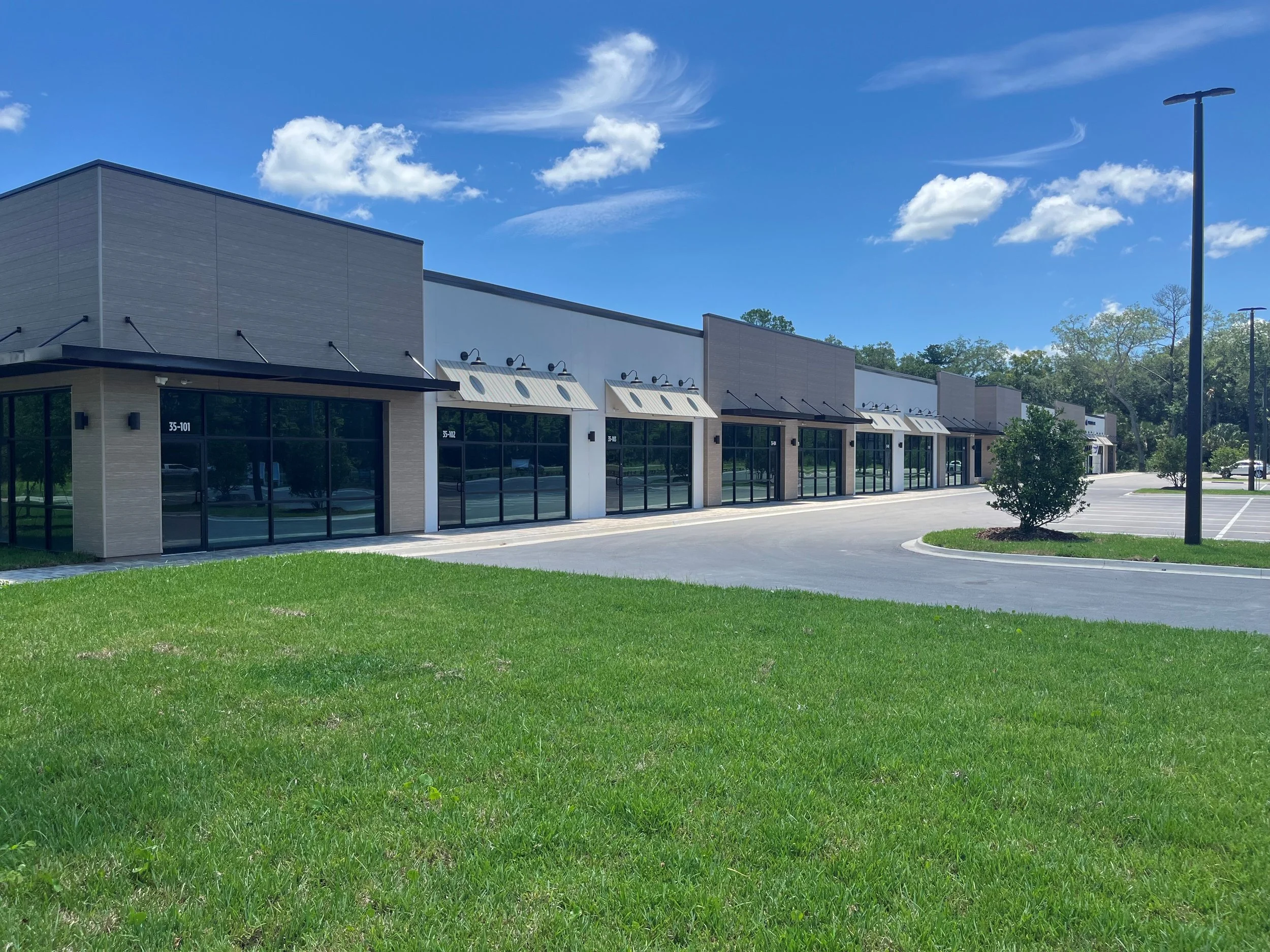
When you search for commercial renovation contractors near me, the results come flooding in: dozens of names, a handful of star ratings, and no clear way to tell who has actually built out a medical clinic or finished a retail tenant improvement on time. That frustration is real, and it costs business owners more than just time. Hiring the wrong contractor leads to blown budgets, missed deadlines, and construction defects that take months to untangle.
The good news is that finding the right contractor is a learnable process, not a guessing game. This guide walks you through six practical steps: where to find qualified commercial renovation contractors near me, how to verify credentials, how to match experience to your project type, what to ask in interviews, how to read bids, and what your contract needs to say before you sign. By the end, you'll know exactly what a qualified commercial remodeling contractor looks like and how to hold every candidate to that standard.
The benchmark worth keeping in mind throughout: a full-service commercial renovation contractor manages your entire project under one accountable team, from preconstruction planning and permitting through subcontractor coordination, inspections, and final finishes. That's the model. Every contractor you evaluate should be measured against it.
Where to find commercial renovation contractors near me
General consumer review platforms are a starting point, but they were built for homeowners. A contractor who installs kitchen cabinets and one who builds out a dental clinic are different animals, and most residential-focused platforms don't distinguish between them. For commercial work, start with sources that are actually calibrated for it: commercial bid networks, local trade association directories, and commercial-focused platforms like the Procore Construction Network, which lets you search by business need and geography rather than star ratings alone.
The Better Business Bureau is useful for one specific thing: checking complaint history and accreditation status. Use it to screen, not to discover. Thumbtack and similar platforms can help you generate an initial list of local commercial renovation contractors quickly, but treat them as a first step, not a vetting tool. The best vetting signal you can get is a referral from someone who has hired the contractor on a comparable project.
Industry professionals, commercial real estate brokers, property managers, or architects, often provide high-value, targeted referrals that are hard to replicate through online searching alone. When you get a referral, ask specifically: What was the project type? How did they handle scope changes? Did they communicate proactively, or did you have to chase them? Did the project finish on schedule? Corroborate any referral with project-specific references and documentation before moving forward.
Build a shortlist of several qualified candidates, for example, three to five commercial renovation contractors near me, before you request bids. Narrow by project type first, whether that's office, retail, medical, restaurant, or industrial, before you start comparing reputation signals or pricing. A contractor who excels at warehouse renovations may have no idea how to handle the infection control requirements of a healthcare build-out.
Credentials every commercial remodeling contractor must carry
Indiana handles commercial contractor licensing differently than many states. There is no single statewide general contractor license for all commercial work; instead, licensing is managed at the city and county level for general contracting, while specific trades like plumbing are licensed through the Indiana Professional Licensing Agency. Before you hire anyone, check the licensing requirements in your specific city or county, and verify any state-regulated trades through the IPLA's public license lookup tool.
What you're looking for on any license listing: active status, the correct trade classification, the license expiration date, and any disciplinary history. A contractor who hesitates to share their license number or can't produce it quickly is a disqualifier.
On insurance, the minimum you should require is general liability coverage and workers' compensation for any contractor with employees. For commercial projects, general liability limits are often higher than residential minimums, and you should ask for a certificate of insurance as standard practice, not as a special favor. Surety bonding is an important additional protection in many jurisdictions and for many commercial jobs; ask about bond availability and verify bond status, because requirements vary by state and project type.
The permit question is one of the clearest signals separating professional contractors from shortcut-takers. Permit and licensing rules vary by jurisdiction and project scope, so confirm with your local building department whether the contractor or the owner must be the permit holder. A professional contractor should be able to explain exactly how permitting and inspections will be handled in your area and provide evidence of that process. A contractor who seems vague about who will be responsible for permits and inspections is telling you something important about how they operate.
How to match a contractor's experience to your specific project type
Years in business is a weaker signal than most people assume. A contractor with 20 years of residential remodeling and a contractor with six years of focused commercial renovation work are not interchangeable. Commercial projects involve different code requirements, different coordination between trades, different permitting processes, and different consequences for getting things wrong.
Project type experience matters even within commercial work. A contractor who has built out a dozen dental offices understands operatory plumbing, medical gas lines, ADA compliance, and infection control requirements that a general commercial remodeler may have never encountered. A restaurant renovation contractor understands ventilation systems, grease trap requirements, and health department inspections. These are not details you want your contractor to learn on your job.
When you review a contractor's portfolio, look for before-and-after documentation on projects at a comparable scale to yours, completed within the last two to three years. Don't let a contractor dazzle you with a highlight reel from a decade ago. You want evidence of active, relevant, completed work with inspections signed off, not historical branding material.
The accountability model is the most important differentiator of all. There is a meaningful difference between a full-service commercial renovation contractor who manages planning, permitting, subcontractor coordination, mechanical, electrical, plumbing, and finishes within a single accountable team, and a trade shop that only handles one piece of the puzzle. When you hire individual tradespeople and coordinate them yourself, every gap between them becomes your problem. When you work with a contractor like Ascension Construction in Indianapolis, you have one point of contact from initial planning through final walkthrough. Gaps in accountability don't accumulate because there's only one team responsible for the whole project. That model is worth finding in any local market.
Ten questions to ask when you interview office renovation contractors near me
A structured interview doesn't have to feel like an interrogation. Think of it as a natural conversation where you're trying to understand how the contractor actually works, not just how they present themselves. These ten questions will tell you what you need to know.
- How many projects similar to mine have you completed in the last two to three years?
- Can you walk me through a recent comparable project from start to finish?
- Who supervises the job day to day, and who is my main point of contact?
- Are youlicensed, insured, and bonded, and can you provide documentation now?
- How do you handle permits, inspections, and code compliance?
- How did you build this estimate, and what is specifically excluded?
- What is your change-order process, and how do you handle unexpected costs?
- What are your schedule milestones, and how will you communicate progress?
- Who are your subcontractors, and how do you manage their quality?
- Can I speak with references from comparable projects and see completed work?
Pay close attention to how specific the answers are. A contractor who has done this work recently will give you project-specific details without prompting. Vague answers, generalities, or pivoting to sales language instead of real project experience are warning signs.
The red flags that matter most: reluctance to provide references, verbal-only scope with nothing in writing, inability to produce license or insurance documentation quickly, and pressure to sign before you've had time to review. The most dangerous red flag of all is a bid that is significantly lower than the others. A lowball bid almost always signals missed scope, and that missing scope doesn't disappear. It reappears as change orders once the project is underway, often at worse terms than if it had been priced correctly from the start.
How to compare bids from commercial renovation contractors near me
Before you can compare bids intelligently, you need a realistic sense of what commercial renovation work costs in 2026. For office renovations, expect to budget roughly $75 to $250 per square foot depending on scope and finish level, with basic refreshes landing toward the lower end and full tenant build-outs pushing higher. Retail tenant improvements typically run $40 to $180 per square foot for standard commercial work. Restaurant renovations are consistently the most expensive category, usually ranging from $150 to $500 or more per square foot, because of the kitchen systems, ventilation, plumbing, and code requirements involved. Use these ranges to sanity-check bids, not as guaranteed outcomes.
A complete commercial renovation bid should include a detailed scope of work with inclusions and exclusions clearly stated, a line-item breakdown by trade or project phase, a project schedule with milestones, allowance items labeled as such, and any items that are the owner's direct responsibility. A bid that is a single number on a page is not a real commercial proposal. It is a placeholder that will change, usually at your expense.
When comparing bids, bids that are closely clustered in cost suggest all contractors are working from a comparable scope. A bid that comes in 30 to 40 percent below the others is not a deal. It signals that the contractor either missed significant scope or plans to recover margin through change orders once work is underway. Both outcomes cost you more than the higher bid would have.
Contract terms and payment schedules that protect your investment
A standard commercial renovation payment structure follows a straightforward logic: you pay as verified work gets done, not in advance of it. A typical structure starts with a mobilization deposit of 10 to 20 percent at contract signing, followed by progress payments tied to completed and inspected milestones such as demolition, rough-in, framing, mechanical and electrical work, and substantial completion. Retainage of 5 to 10 percent is held from each draw until the punch list is complete and all closeout documentation is delivered. Payments should be tied to verified work, not calendar dates.
The contract clauses you should insist on before signing are not optional extras. They are the basic framework of a professional commercial agreement:
- A detailed written scope with drawings, specifications, and exclusions
- A written change-order clause requiring your approval before work proceeds
- A schedule and delay clause with a real completion date and extension process
- A retainage clause with clear release conditions tied to final acceptance
- Workmanship warranty terms with a defined correction period
- Insurance and indemnity language, including naming you as an additional insured
- A termination-for-default clause with required notice and payment consequences
- A dispute resolution process specifying mediation, arbitration, or litigation terms
- A lien-waiver requirement before final payment is released
Treat this list as your pre-signing checklist before the contract goes to your attorney for final review. A contractor who pushes back on any of these clauses as unreasonable should raise your concern level. These protections are common in professional commercial contracts, and significant resistance to them is a warning sign about how the contractor expects the project to go.
The standard worth holding every contractor to
The six-step framework in this guide gives you a complete process for finding commercial renovation contractors near me: locate candidates through the right sources, verify credentials directly, match experience to your specific project type, run a structured interview, evaluate bids against realistic 2026 cost benchmarks, and protect yourself with a complete, well-drafted contract. The goal throughout is not to find the cheapest contractor. It is to find the most accountable one.
Accountability in commercial renovation means one team responsible for the complete scope, from preconstruction planning through final finishes, with clear communication and no gaps between trades. That is the standard Ascension Construction holds itself to on commercial remodeling and renovation projects throughout Central Indiana. One point of contact. One accountable team. A complete scope managed from start to finish, with permits, subcontractor coordination, mechanical and electrical work, and final inspections coordinated by a single responsible team.
If you're planning a commercial renovation in Indianapolis or anywhere in Central Indiana, reach out to the Ascension Construction team to request a consultation. Come prepared with your project type, square footage, and target timeline, and you'll walk away with a realistic picture of what your project involves, what it costs, and what accountability actually looks like on a commercial job.





.svg.webp)