ADA Requirements for Medical & Healthcare Facilities
ADA compliance plays a critical role in modern healthcare construction and medical facility renovations throughout Indiana. Unlike many standard commercial buildings, healthcare environments must accommodate patients with a wide range of mobility, accessibility, and physical needs every single day. From clinics and urgent care facilities to dental offices, outpatient centers, and specialty medical practices, healthcare buildings must be designed to ensure safe, comfortable, and accessible experiences for all patients, visitors, and staff.
When planning a healthcare construction project, ADA requirements affect nearly every part of the building — including entrances, parking lots, hallways, exam rooms, restrooms, waiting areas, reception counters, and circulation paths. Unfortunately, many older medical facilities were originally constructed before current accessibility standards existed, making ADA upgrades one of the most important aspects of healthcare renovations today.
At Ascension Construction, we understand that ADA compliance is not simply about passing inspections. Proper accessibility planning improves patient experience, reduces liability concerns, and ensures healthcare facilities remain functional for long-term use. Whether building a new medical office or renovating an existing healthcare facility in Indiana, accessibility should be integrated into the project from the very beginning.
One of the first areas evaluated during healthcare construction is site accessibility and parking. ADA-compliant healthcare facilities require designated accessible parking spaces, proper access aisles, compliant slopes, curb ramps, and safe pathways leading into the building. Medical facilities often require a higher level of accessibility planning because many patients may rely on wheelchairs, walkers, or mobility assistance devices.
Building entrances must also meet strict accessibility requirements. Entryways should provide proper clearances, accessible thresholds, compliant door hardware, and safe maneuvering space. Automatic doors are increasingly common in healthcare construction because they improve accessibility while also enhancing convenience for patients entering and exiting the facility.
Inside the building, hallway widths and circulation space become extremely important. Medical offices frequently need wider pathways than standard commercial buildings due to wheelchairs, patient transport equipment, and high daily traffic. Narrow hallways or improperly designed layouts can create accessibility issues that affect both safety and operational flow.
Healthcare restroom construction is another major component of ADA compliance. Medical restroom layouts must provide proper turning radius clearances, grab bars, fixture heights, sink accessibility, and adequate maneuvering space. Older healthcare facilities often require substantial plumbing and framing modifications during renovations in order to bring restroom systems up to current accessibility standards.
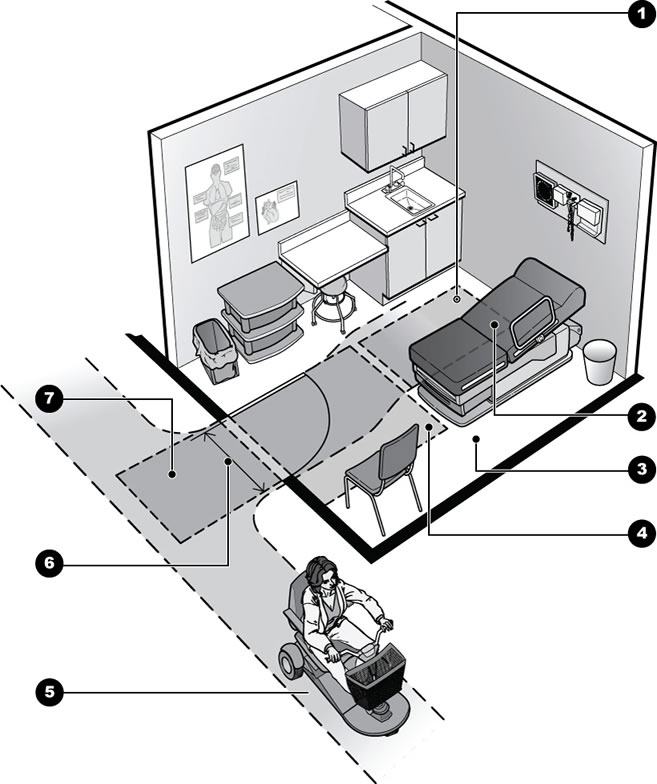
Exam rooms and treatment spaces also require careful planning during healthcare facility construction. ADA requirements may impact exam table accessibility, doorway widths, patient circulation space, sink placement, and equipment layout. Designing accessible exam rooms from the beginning helps improve patient comfort and operational efficiency while reducing the need for future modifications.
Reception and waiting areas are another commonly overlooked component of healthcare accessibility. ADA-compliant reception counters require accessible transaction heights, while waiting rooms should provide accessible seating arrangements and circulation space that allows all patients to navigate comfortably through the facility.
In addition to patient accessibility, healthcare facilities must also consider emergency egress and life safety compliance. Accessible exits, ramps, pathways, and emergency evacuation procedures are critical parts of healthcare construction planning. Many healthcare renovations trigger additional code reviews once permits are submitted, especially if structural changes, occupancy modifications, or layout reconfigurations are involved.
Another important consideration is integrating ADA compliance into older healthcare building renovations. Many older clinics and medical offices were never designed to support modern accessibility requirements, meaning renovations often involve structural modifications, widened openings, relocated plumbing systems, updated restrooms, or revised floor plans. These upgrades can become complex when working within existing structures, making early planning and professional coordination essential.
At Ascension Construction, we help healthcare providers throughout Indiana navigate ADA requirements during medical office construction and healthcare facility renovations. From accessibility planning and restroom upgrades to hallway modifications, parking improvements, and compliant layout design, our team focuses on creating healthcare environments that are safe, functional, and fully code-compliant.
Healthcare facilities are designed to serve people at vulnerable moments in their lives. Ensuring accessibility throughout the building is not only a legal requirement — it is part of creating a professional and welcoming patient experience. Proper ADA planning helps healthcare providers improve safety, reduce liability, and support long-term operational success for years to come.
https://www.ada.gov/law-and-regs/design-standards/2010-stds/





.svg.webp)